From Bedroom to Festival Stage: How to Land Your First Big Gig
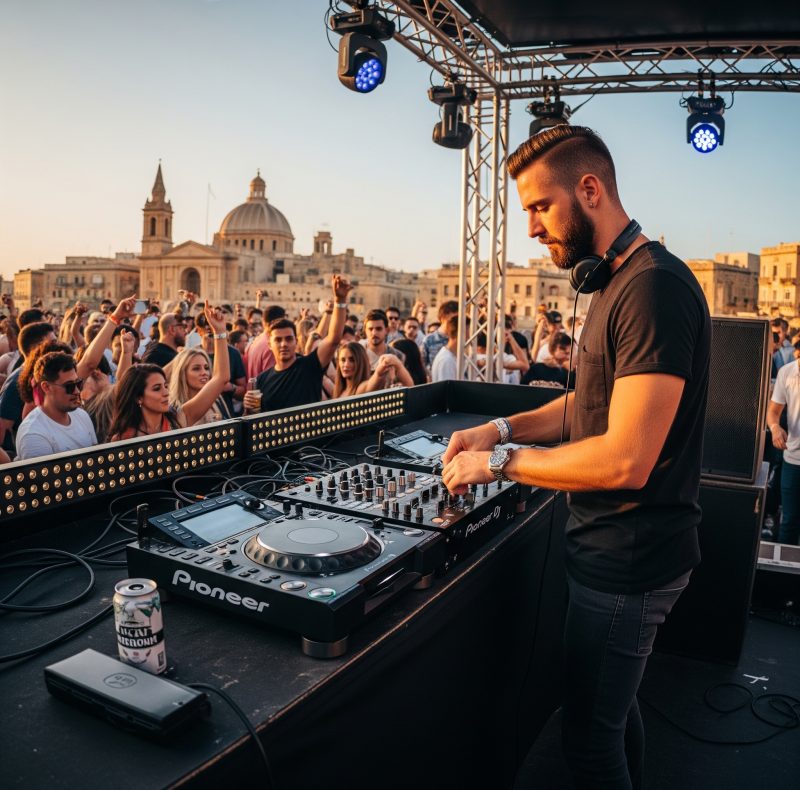
Every DJ imagines the moment: the crowd, the stage, the lights. Here’s the strategy — not just the dream — that takes you from spinning alone in your room to landing the gig that changes everything.
The Leap from Bedroom to Stage
Every DJ remembers the moment: spinning tracks alone in their room, imagining the crowd, the lights, and the energy of a room fully in their hands. But how do you actually get from that bedroom to a festival stage?
The answer isn’t just skill. It’s strategy, branding, connections, and consistency — all working together over time. This guide gives you the exact roadmap, step by step.
Why Landing Your First Big Gig Matters
Your first big gig is more than one night — it’s a launchpad. It sets in motion a chain of events that a hundred bedroom sessions never could:
Name recognition
Puts you in front of promoters, fans, and industry contacts simultaneously
Confidence
Builds the live performance confidence needed to pursue bigger venues
Loyal fans
Attracts an audience that follows you beyond that single night
Open doors
Creates the momentum that leads to collaborations and further bookings
The spark moment
Many successful DJs look back at their first real break as the single moment that changed their trajectory. It’s not just a gig — it’s the evidence that the career is real.
8 Steps from Bedroom DJ to Festival Stage
Master the craft before the stage
Be undeniable behind the decks before you reach for the spotlight
Technical skill is the non-negotiable foundation. No amount of branding, networking, or social media presence will compensate for a DJ who can’t hold a room — and promoters will find out quickly.
- Practice daily — transitions, EQ control, and track selection. Record yourself and listen back critically; mistakes you can’t hear in the moment become obvious in playback
- Learn to read and respond to energy flow — not just beatmatch. The ability to sense what a room needs before it knows it is what separates good DJs from great ones
- Simulate real performance pressure — practice longer sets with club-style playlists, time limits, and no pausing to reconsider track choices
Build your personal DJ brand
In 2026, being great isn’t enough — you need an identity
Promoters don’t just book skill — they book marketable identities. A clear, consistent brand makes you memorable, helps you stand out from hundreds of other emerging DJs, and communicates your value before anyone presses play.
- Define your style: deep house, techno, drum and bass, genre-blending — commit to a clear musical direction that makes you easy to place and describe
- Build a visual identity: logo, consistent social media aesthetic, and professional press photos that reflect your sound’s mood
- Craft your narrative: what’s your story? “Dark techno with hypnotic grooves” is more bookable than “I play a bit of everything”
Network with promoters and DJs
Relationships matter as much as skills — often more
The most direct path to your first big gig is through the people who control access to stages — and those relationships are built through consistent presence, generosity, and patience, not cold emails.
- Attend local events regularly and introduce yourself to promoters in person — a face-to-face conversation is worth ten cold emails
- Support other DJs’ sets genuinely — community over competition, every time. The scene notices who shows up for others
- Offer to open or close sets before asking for headliner slots — less glamorous, but it gets you in rooms and builds relationships with the promoters who matter
Networking mindset
Think of networking like DJing: timing, flow, and reading the room are everything. Approach it with the same attentiveness you’d bring to a set.
Create and share your demo mixes
Treat demo mixes like your musical CV — they’re proof of what you can do
Promoters want auditory evidence before they commit a booking. A well-recorded, professionally presented demo mix is often what turns interest into an actual offer.
- Record clean, professional mixes of 30 to 60 minutes — long enough to demonstrate a full musical journey, short enough to hold a promoter’s attention
- Post consistently on SoundCloud, Mixcloud, and YouTube — these are the primary platforms where techno and electronic music industry contacts discover new artists
- Share monthly or quarterly — enough to demonstrate ongoing activity without diluting the quality of each individual release
Produce your own tracks
A single track that gains traction can change everything overnight
Producing original music is the single biggest accelerator available to an emerging DJ. It gives labels something to sign, gives promoters something to market with your name, and gives social media audiences a reason to share your work beyond a mix they might forget.
- Upload original music to Spotify and Beatport — streaming presence and purchase data are metrics labels and promoters actively review
- Share short clips on TikTok and Instagram Reels — the algorithm pushes music content to new audiences organically when it resonates
- Send tracks directly to DJs and labels whose sound genuinely aligns with yours — targeted outreach always outperforms mass submissions
Leverage social media strategically
Your Instagram and TikTok are your portfolio — promoters check before booking
Social media is how promoters verify that you’re the real thing before they take a chance on booking you. A dormant or generic profile raises questions; an active, personality-driven one builds confidence.
- Post 2 to 3 times per week — a mix of set clips, behind-the-scenes footage, music tips, and personality that makes following you feel worthwhile
- Avoid spamming event flyers — one promotional post surrounded by four genuine content posts is the right ratio
- Engage with your audience — reply to comments, respond to DMs, ask questions. Social proof is built through genuine two-way engagement
Start small and scale progressively
Every level earns the next one — you don’t skip straight to the boss fight
Each stage of the progression builds specific skills, credibility evidence, and industry relationships that the next level requires. Trying to skip stages doesn’t save time — it removes the foundations that make larger opportunities viable.
- House parties and private events — first live performance experience, minimal pressure, maximum learning
- Local bars and cafés — first paid or semi-paid exposure, build your local name recognition
- Local and underground clubs — credibility in the scene, performance evidence, promoter relationships
- Regional festivals and events — broader audience, industry visibility, the first “big” stage
- National and international festivals — where the career compounds from the work of every previous level
Documentation matters
Collect photos and videos of every set, at every level. This content becomes your proof of performance history — and it compounds in value as your career grows.
Seize opportunities and be reliable
Your first big gig might come when you least expect it — be ready
Reliability is the most underrated quality in the DJ industry. Promoters remember who showed up on time, who was prepared, and who made their night easier — and they rebook those artists. The DJ who was difficult to work with, regardless of their skill, rarely gets a second chance at the same venue.
- Be ready to fill in for last-minute cancellations — the DJ who says yes at short notice builds extraordinary goodwill with promoters
- Always arrive early, fully prepared with organised music and a clear set plan — never make a promoter worry about whether you’re going to show up
- Send a brief, genuine thank-you message to the promoter after every gig — this single habit dramatically increases rebooking rates
“Going from bedroom to festival stage isn’t luck. It’s craft, brand, network, music, and showing up — consistently.”
What Promoters Really Look for in New DJs
Promoters are businesspeople. Their primary goal is running successful events — and they evaluate every booking through that lens. Here’s what actually matters when they’re making decisions:
Crowd control
Can you keep people dancing for your entire slot — not just drop one well-timed track?
Professionalism
Are you easy to work with, reliable, and communicative throughout the process?
Brand value
Do you bring your own following to an event, or are you dependent entirely on theirs?
Originality
Do you have a distinctive sound that makes their event more interesting, or do you sound like everyone else?
Mistakes to Avoid on the Path to Your First Gig
-
Sending unprofessional emails to promotersMessy, generic, or desperate outreach damages your reputation before the conversation even starts. Every email is part of your brand.
-
Expecting headliner slots right awayAsking for the top of the bill before you’ve earned any local credibility comes across as either ignorant or arrogant — neither is a good look.
-
Copying another DJ’s style too closelyPromoters recognise derivative sounds quickly. Influences are fine — a copy is a shortcut that leads nowhere.
-
Playing for free too habituallyA small number of strategic free gigs for genuine exposure is fine. An indefinite pattern of free performances signals that you don’t value your own work — and neither will anyone else.
Real Stories: DJs Who Went from Bedroom to Festival
Every one of these artists started exactly where you are. The path they followed wasn’t unique — persistence, branding, and music working together over time.
Fisher
Small gigs + viral track + worldwide stages
Worked small Australian gigs for years before “Losing It” went viral — a single original track compressed his career timeline dramatically and put him on festival stages worldwide.
Amelie Lens
Underground roots + own label + global recognition
Started with underground parties in Belgium, built her identity consistently, launched her own Lenske label — and let the compound effect of music, brand, and community do the work over time.
Dom Dolla
Local hustle + original tracks + social media
Hustled local gigs relentlessly, produced original music consistently, and used social media strategically — three pillars working together until the breakthrough arrived.
The shared pattern
All three started small — but all three combined persistence, branding, and original music to break through. None of them waited to be discovered. They made themselves impossible to ignore.
Frequently Asked Questions
Do I need to produce music to land my first big DJ gig?
How long does it usually take to land a festival DJ gig?
Should I play for free when starting out as a DJ?
What do promoters look for when booking new DJs?
How do I approach promoters as an emerging DJ?